
About Namibia
An Overview of Namibia
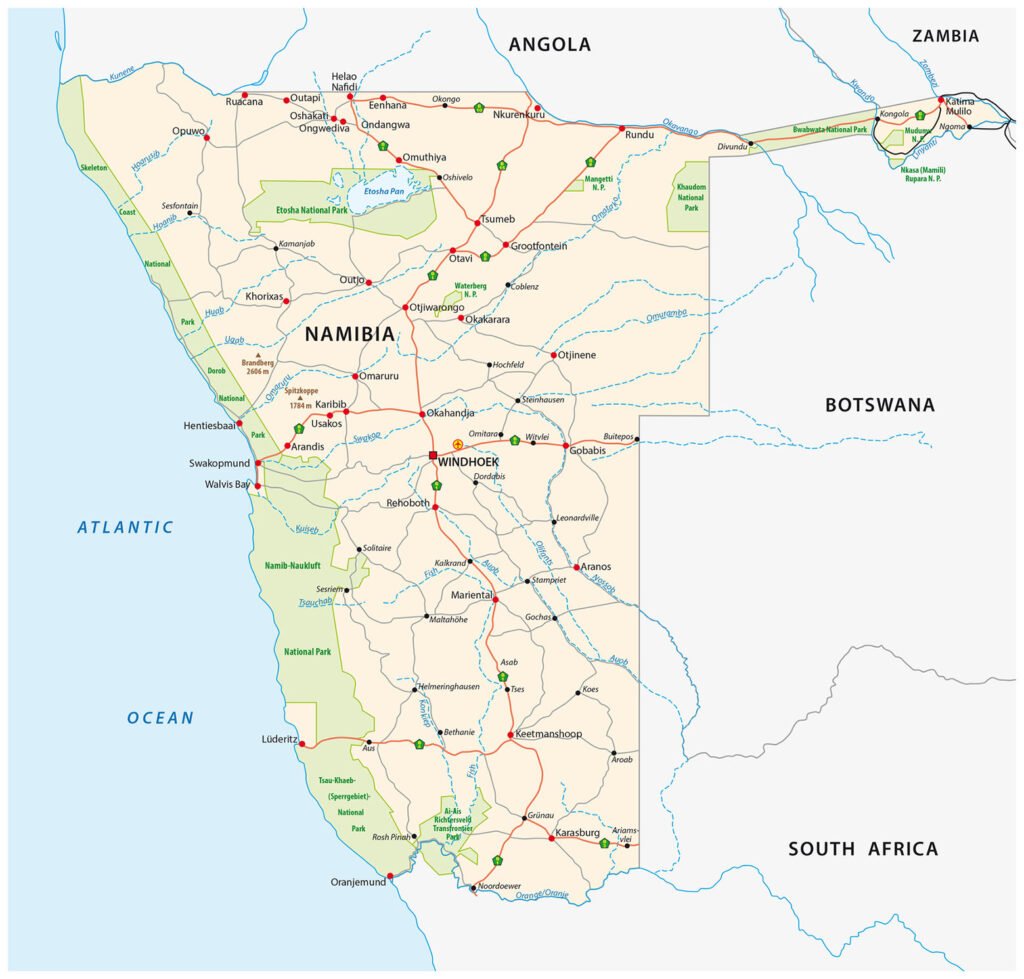
Namibia, situated in the southwestern region of Africa, is bordered by the Atlantic Ocean to the west, Angola to the north, and South Africa to the south.
It is renowned for its diversity, encompassing a variety of landscapes including deserts, savannas, and grasslands. The Namib Desert, one of the world’s oldest deserts, stretches along the Atlantic coast and features the striking red sand dunes of Sossusvlei, which are among the tallest in the world. The country also hosts several national parks, such as Etosha National Park, famous for its rich wildlife and expansive salt pans, offering a vital sanctuary for numerous species, including elephants, lions, and rhinoceroses.
Geographically, Namibia is characterized by its unique topography, with the Namib Desert dominating the western expanse and the Kalahari Desert situated to the east. The central region is often defined by the Windhoek highlands, where the capital city, Windhoek, lies. The country’s climate is predominantly arid to semi-arid, marked by a clear distinction between the rainy season, which occurs from November to April, and the dry season, from May to October. These climatic conditions contribute significantly to the diverse ecosystems found here, fostering flora and fauna specifically adapted to extreme conditions.
Namibia is not only rich in natural beauty but also boasts a vibrant cultural tapestry formed by its various ethnic groups, including the Ovambo, Herero, and Himba peoples, among others. This cultural richness is reflected in their languages, traditions, and lifestyles, making Namibia a compelling destination for those interested in both nature and culture. Overall, Namibia presents an exceptional blend of geographical wonders and cultural diversity, underlining its status as a remarkable country within the African continent.
Map of Namibia
About Namibia
A Brief History of Namibia
Namibia's history is a rich tapestry woven through centuries, characterized by its indigenous cultures, colonial encounters, and a determined struggle for independence. The earliest inhabitants of Namibia were the San and Damara peoples, whose traditions and ways of life are deeply rooted in the region. Over the centuries, these indigenous groups developed intricate social structures and engaged in subsistence hunting and gathering.
In the late 19th century, European colonization brought significant changes to this landscape, particularly due to the interest of German colonizers, who formally established control in 1884, naming the territory German South West Africa. The colonial administration imposed severe restrictions on the indigenous population, leading to conflicts such as the Herero and Nama Wars (1904-1908), which resulted in devastating consequences for both communities, including large-scale loss of life and displacement.
After Germany's defeat in World War I, Namibia came under South African administration as a League of Nations mandate. The imposition of apartheid policies by South Africa in the 20th century further marginalized the black majority, leading to increased political activism. This situation catalyzed the formation of various nationalist movements, prominently the South West Africa People’s Organization (SWAPO), which sought to liberate Namibia from foreign rule.
After a prolonged liberation struggle, Namibia gained independence on March 21, 1990, establishing itself as a sovereign nation. The first democratic elections were held in November 1989, culminating in the election of Sam Nujoma, who became the first president. Since independence, Namibia has worked towards building a stable political environment, despite facing social and economic challenges. Today, the nation stands as a testament to resilience, with efforts focused on reconciling a complex history while striving for a brighter future.
The Climate of Namibia
Namibia is characterized by its diverse climate zones that significantly influence both its natural environment and human activities. The southern part of the country features the Namib Desert, which exhibits an arid desert climate. This region is marked by extremely low rainfall, with some areas receiving less than 50 mm annually. The high temperatures during the day can plummet at night, leading to substantial temperature variations. This unique climate not only shapes the landscape but also affects the flora and fauna adapted to such harsh conditions.
The central and northern regions of Namibia, in contrast, experience a semi-arid climate with seasonal rainfall. The rainy season typically occurs between December and April, resulting in sporadic showers that bring life to the arid surroundings. This seasonal precipitation plays a crucial role in agriculture, as it provides the much-needed water for crops and livestock. Farmers in these regions primarily rely on this rainfall to sustain their agricultural practices and improve food security.
Temperature variations are another significant aspect of Namibia's climate. The country experiences high daytime temperatures, particularly in summer, with averages often exceeding 35°C. In the cooler months, temperatures can drop drastically in certain areas, especially in the desert. These variations necessitate precise planning for agriculture and tourism, as visitors are recommended to prepare for both hot days and cool nights.
The impact of Namibia's climate extends beyond agriculture, influencing tourism as well. The stark beauty of the Namib Desert, coupled with vibrant wildlife in more temperate regions, attracts a diverse range of visitors. The varied climate enhances outdoor experiences from scenic views to wildlife safaris. Understanding Namibia's climate is essential for those looking to explore the richness of this vast country.
Demographics of Namibia
Namibia, known for its stunning landscapes and diverse cultures, has a population of approximately 2.5 million people, making it one of the least densely populated countries in the world. The demographic composition of Namibia is predominantly African, with the Ovambo people making up the largest ethnic group, followed by the Herero, Nama, Damara, and other ethnic groups. Each of these groups contributes to Namibia's rich cultural tapestry, which is a mosaic of various traditions, languages, and practices.
The official language of Namibia is English, a remnant of colonial influence, but the linguistic landscape is much more diverse. Afrikaans, German, and indigenous languages such as Oshiwambo, Otjiherero, and Nama are widely spoken. Approximately 60% of the population speaks an indigenous language as their first language, highlighting the country’s cultural richness and the importance of preserving these languages.
Urbanization trends in Namibia have seen a steady increase over the years, with a significant proportion of the population moving to urban areas for better employment opportunities and services. Windhoek, the capital and largest city, serves as a central hub for commerce and administration, drawing many from rural regions. This urban shift, while beneficial in providing better services, raises challenges such as housing shortages and increased pressure on infrastructure.
The demographic patterns also indicate a youthful population, with about 40% of Namibians being under the age of 15. This youthful demographic presents both opportunities and challenges for the nation, as it seeks to balance the need for educational and employment resources with the realities of economic constraints. The growth rate of the population, while relatively low compared to global averages, brings about ongoing discussions on sustainable development and resource allocation.
The Economy of Namibia
Namibia's economy is characterized by a diverse structure, significantly influenced by its natural resources and geographical attributes. The country places a strong emphasis on key industries such as mining, agriculture, and tourism. Particularly notable is the mining sector, which is a critical contributor to Namibia's GDP and export revenues. The nation is renowned for its rich deposits of minerals like diamonds, uranium, and gold, making it one of the leading mining destinations in Africa. The mining industry's performance plays a pivotal role in economic stability, driving investment and job creation.
Agriculture also features prominently within Namibia's economic framework, albeit facing challenges due to the arid climate and limited arable land. Despite these constraints, agriculture remains essential for rural livelihoods, providing jobs for a significant portion of the population. The sector incorporates both subsistence farming and commercial operations, focusing on livestock and crop production. However, the agricultural output can be unpredictable, heavily reliant on rainfall, which raises concerns regarding food security.
Tourism has emerged as another vital component of Namibia's economy, attracting visitors with its stunning landscapes, wildlife, and cultural heritage. Famous attractions such as Etosha National Park and the Namib Desert contribute substantially to foreign exchange earnings, thus enhancing economic resilience. The tourism sector not only generates revenue but also creates jobs, supporting various auxiliary services like hospitality and transport.
Despite these strengths, Namibia faces economic challenges, including high unemployment rates and significant income inequality. These issues hinder broader economic development and limit opportunities for many citizens. The government continues to work on policies aimed at fostering inclusive growth, improving education, and addressing skills shortages to reduce unemployment and enhance economic stability.
Wildlife and Natural Resources in Namibia
Namibia is renowned for its rich biodiversity and stunning landscapes, providing habitats for a myriad of wildlife species. The country is home to iconic animals such as elephants, lions, rhinos, and countless bird species, making it a prime destination for wildlife enthusiasts. The conservation of these species and their habitats is a priority for the Namibian government and various non-governmental organizations. They have implemented numerous conservation programs aimed at protecting endangered species and restoring ecosystems.
National parks such as Etosha, Namib-Naukluft, and Bwabwata are vital to the country’s conservation efforts. Etosha National Park, for example, covers over 22,000 square kilometers and is celebrated for its unique salt pans and diverse wildlife. Here, conservationists have worked diligently to ensure the protection of various species, including the critically endangered black rhino. These national parks not only preserve biodiversity but also provide vital ecological services, such as water filtration and carbon sequestration.
Ecotourism plays a significant role in Namibia's economy by fostering wildlife conservation while providing sustainable income sources for local communities. The growth of ecotourism has encouraged investment in preserving natural habitats and wildlife. Tourists are drawn to Namibia's breathtaking landscapes and abundant wildlife, with activities ranging from guided safaris to bird watching, thus supporting the local economy. Furthermore, initiatives like community-based natural resource management empower local populations by involving them in conservation efforts, ensuring that they directly benefit from preserving their natural resources.
The interplay between wildlife conservation and natural resource management not only enhances Namibia's ecological integrity but also promotes economic growth through sustainable tourism practices. This synergy of conservation and tourism marks Namibia as a leader in wildlife protection, showcasing the potential of integrating natural resources into a thriving economy.
Cultural Heritage and Ethnic Groups
Namibia's cultural heritage is as diverse as its landscapes, shaped by the various ethnic groups that inhabit the region. Among the most prominent are the Ovambo, Himba, San, and Nama peoples, each boasting unique traditions, customs, and lifestyles. The Ovambo, constituting one of the largest ethnic groups, primarily reside in the northern part of the country. Their societal structure is matrilineal, emphasizing the role of women in family and community leadership. Traditional Omukwaniilwa practices, colorful attire, and vibrant ceremonies mark key aspects of Ovambo life, reflecting their strong connection to the land.
The Himba people are renowned for their distinctive appearance, characterized by their elaborate hairstyles and ochre-colored skin, achieved through the application of a mixture of butterfat and ochre. They are semi-nomadic pastoralists, predominantly found in the Kunene region. The Himba maintain a deeper spiritual connection to their environment, often engaging in rituals and ceremonies that pay homage to their ancestors and the elements. Their unique traditions, such as the Himbas' important marriage customs and the concept of owning livestock as a status symbol, play a crucial role in their culture.
In contrast, the San people, also known as Bushmen, are considered one of the oldest inhabitants of Southern Africa. They are known for their rich oral traditions, hunting and gathering lifestyle, and their intricate cave paintings, which echo their historical interaction with the land. Their deep knowledge of the environment and sustainable practices are increasingly recognized in contemporary conservation efforts. Lastly, the Nama people, with their roots in pastoralism, have a rich heritage that includes storytelling, music, and social gatherings, showcasing the importance of community and collective memory.
Together, these ethnic groups contribute to Namibia’s rich tapestry of cultural heritage, fostering a society that values diversity and historical continuity.
Tourism in Namibia
Namibia has emerged as a remarkable tourist destination, renowned for its diverse landscapes, rich culture, and unique wildlife. One of the country's major attractions is Etosha National Park, a significant conservation area teeming with an array of species, including elephants, lions, and rhinos. The park is distinguished by its vast salt pan, which not only serves as a prime habitat for wildlife but also offers stunning vistas, making it ideal for photography and wildlife safaris.
An equally captivating destination is the Skeleton Coast, characterized by its dramatic coastline, shipwrecks, and vast sand dunes. This area, with its rugged beauty, attracts adventurous travelers seeking off-the-beaten-path experiences. The eerie atmosphere created by fog and shifting sands only adds to its mystique. Visitors can engage in a variety of activities such as kayaking, fishing, and exploring the ancient landscapes shaped by oceanic forces.
The Namib Desert, recognized as one of the oldest deserts in the world, is another highlight for tourists. The towering sand dunes of Sossusvlei come alive during sunrise and sunset, appearing in vibrant shades of red and orange. Touring this surreal landscape often involves thrilling experiences such as hot air balloon rides and dune boarding.
The impact of tourism on Namibia's economy cannot be overstated. It plays a pivotal role in generating employment opportunities, supporting local businesses, and promoting regional development. The government’s commitment to sustainable tourism encourages eco-friendly practices, ensuring the conservation of both natural resources and cultural heritage. By attracting international visitors, Namibia not only showcases its spectacular natural beauty but also fosters economic growth, making tourism a crucial element of the country's overall development strategy.
The Future of Namibia
As Namibia stands at the crossroads of development, it is crucial to reflect on its current trends and challenges. The nation, rich in natural resources and cultural heritage, faces a variety of social and economic hurdles that will define its trajectory. One pressing challenge is the high unemployment rate, particularly among the youth. With a significant portion of the population under the age of 25, job creation will be critical for fostering stability and growth.
Additionally, Namibia must navigate the impacts of climate change. The country's diverse ecosystems are vulnerable to shifts in weather patterns, which pose risks to agriculture and water resources. Sustainable practices are not just essential for the environment; they also play a crucial role in maintaining economic resilience. By investing in renewable energy and sustainable agriculture, Namibia can mitigate some of these effects and position itself as a leader in environmental stewardship.
Demographically, Namibia's diverse population is its greatest asset. The country's unique blend of cultures can foster innovation and drive social cohesion if properly nurtured. Policies aimed at inclusivity and education will be vital in harnessing this potential. Furthermore, the government’s commitment to addressing social inequalities will play a significant role in determining whether Namibia can achieve its development goals.
In terms of its economy, Namibia has the potential to diversify away from its dependence on mining. By enhancing sectors such as tourism, agriculture, and technology, the country can create a more balanced economic landscape. Investment in infrastructure will also be necessary to support this diversification and facilitate trade.
Overall, while Namibia faces substantial challenges, its strengths—derived from its rich history, dynamic demographics, and robust natural resources—provide a foundation for a promising future. Continued focus on sustainable practices, education, and economic diversification will be essential as Namibia strides forward into the next chapter of its development.