
FAQ
Frequently Asked Questions
Namibia's unique combination of ancient deserts, diverse wildlife, and colonial heritage raises many questions for travelers planning their visit. The country offers everything from desert hiking to wildlife safaris and cultural exploration across its vast landscapes.
What are the top-rated natural landmarks to visit in Namibia?
Sossusvlei stands as Namibia's most famous natural landmark. It features some of the world's tallest sand dunes, with some reaching over 1,200 feet high. The five-million-year-old Dune 45 offers visitors a 30-minute climb with views of the surrounding orange and red dunes.
Fish River Canyon ranks as Africa's largest canyon. The massive gorge stretches across the landscape with steep ravines and deep crevices. During rainy seasons, the Fish River flows through the canyon bottom.
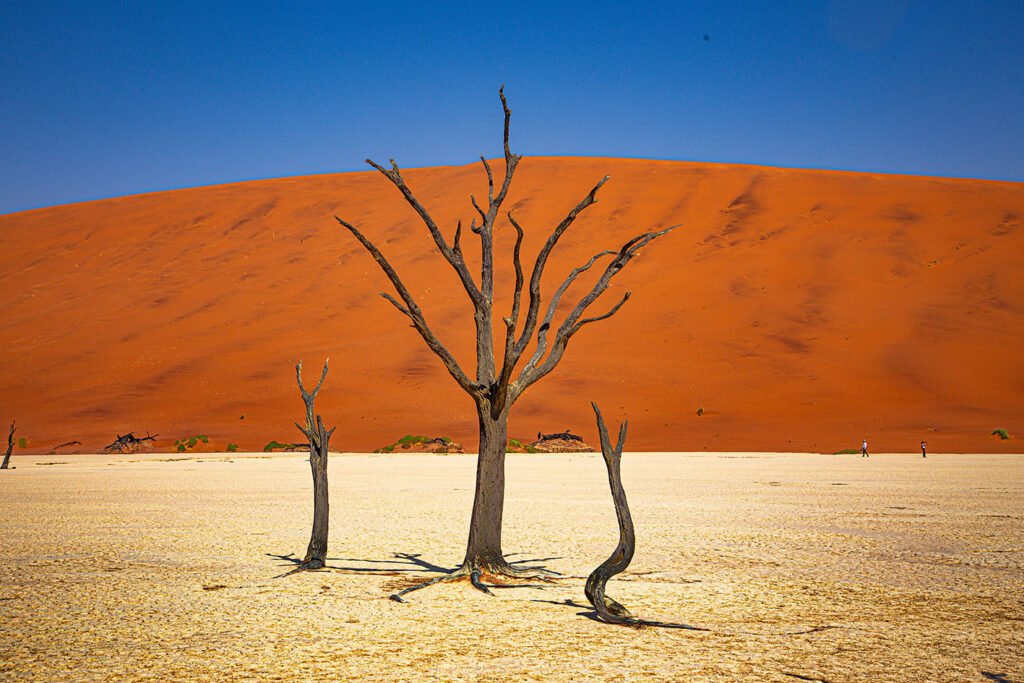
Deadvlei creates one of Namibia's most striking landscapes. Ancient dead trees that died 600 to 700 years ago stand against white clay ground and bright orange dunes. The wood remains preserved because the soil is too dry for decomposition.
The Spitzkoppe mountains rise from the Namib Desert with dramatic granite peaks. Only 600 people have successfully climbed to the top. The red, dusty terrain and steep rocks make it a popular spot for rock climbing.
Which cultural sites in Namibia offer the richest historical experience?
Twyfelfontein holds the largest concentration of rock art in Africa. Over 5,000 petroglyphs dating back 6,000 years cover the area. The images show hunter-gatherers' daily activities, including board games, weapon making, and depictions of animals like giraffes, kudos, and lions.
Brandberg Mountain Range contains over 50,000 ancient rock paintings. Many of these paintings date back 4,000 years. The most famous is the White Lady painting, which archaeologists believe represents either a shaman or hunter.
Swakopmund preserves German colonial heritage through its architecture and culture. Traditional German buildings line the streets, and many residents still speak German today. The coastal town offers restaurants serving German cuisine alongside its beach atmosphere.
Kolmanskop Ghost Town stands as a reminder of Namibia's diamond mining history. Germans settled the town in the early 1900s to work the diamond fields. Buildings now sit abandoned with sand filling rooms several feet deep, peeling paint, and caved roofs.
What unique wildlife viewing opportunities are available in Namibia's parks and reserves?
Etosha National Park provides close encounters with lions, giraffes, elephants, and antelopes. The Etosha salt pan covers almost one-quarter of the park. Animals gather at watering holes throughout the year, even when the pan dries up.
The Cape Cross seal colony houses around 100,000 cape fur seals. This represents the world's largest colony of this sea lion species. Visitors can watch seals breeding, basking in the sun, and playing in the waves within the protected reserve.
Waterberg Plateau protects rare and endangered species. The area shelters black rhinoceros along with 200 different types of birds and mammals. Wildlife tracking tours allow visitors to see rhinos, giraffes, and kudus up close.
The Caprivi Strip offers year-round wildlife viewing due to its high rainfall and major rivers. Large elephant populations roam freely across four reserves. No fences exist, allowing animals to cross into neighboring countries.
Can you list adventure activities available for tourists in the Namibian desert?
Dune hiking attracts visitors to Sossusvlei and surrounding areas. Dune 45 provides a popular 30-minute climb up its spine. The descent offers an exciting run back down the sandy slope.
Rock climbing challenges adventurers at Spitzkoppe. The granite peaks require technical skills due to difficult terrain. The mountains also feature ancient rock paintings for those preferring less strenuous exploration.
Skeleton Coast exploration combines beach walking with desert adventure. Visitors search for shipwreck remains along the foggy coastline. Wildlife spotting includes jackals, hyenas, oryx, kudos, and zebras.
Fish River Canyon offers a five-day hiking trail for experienced trekkers. The route winds through the massive canyon. Less adventurous visitors can view the landscape from public viewpoints.
What accommodations are near major tourist attractions in Namibia?
Sossusvlei area provides lodge options within the Namib-Naukluft National Park. Several properties sit close enough for early morning dune access. Desert camps offer overnight stays with sunrise views of the dunes.
Swakopmund offers the widest range of accommodation types on the coast. Hotels, guesthouses, and vacation rentals serve visitors exploring Walvis Bay and nearby attractions. The town's infrastructure supports various budget levels.
Etosha National Park features rest camps inside the park boundaries. These camps place visitors near major watering holes. Private lodges surround the park's edges for alternative stays.
Waterberg Plateau has lodges at the base of the mountain. Camps provide access to hiking trails and wildlife tracking. Some properties offer guided tours of the plateau and surrounding areas.
Are there guided tours that cover the most famous attractions in Namibia?
Safari tours operate throughout Etosha National Park with experienced guides. Visitors can choose between group tours and private 4x4 rentals. Tours focus on wildlife viewing at watering holes and across the salt pan.
Multi-day desert tours combine Sossusvlei, Deadvlei, and nearby attractions. Guides provide transportation and explain the geology and history of the dunes. Some packages include accommodation and meals.
Skeleton Coast tours guide visitors through the shipwreck sites and seal colonies. Organized trips handle the challenging terrain and weather conditions. Tours often combine Cape Cross with other coastal attractions.
Cultural heritage tours visit Twyfelfontein, Brandberg, and local villages. Guides explain the meaning behind rock art and ancient paintings. Some tours include visits to communities like Okakarara to learn about Herero culture.