
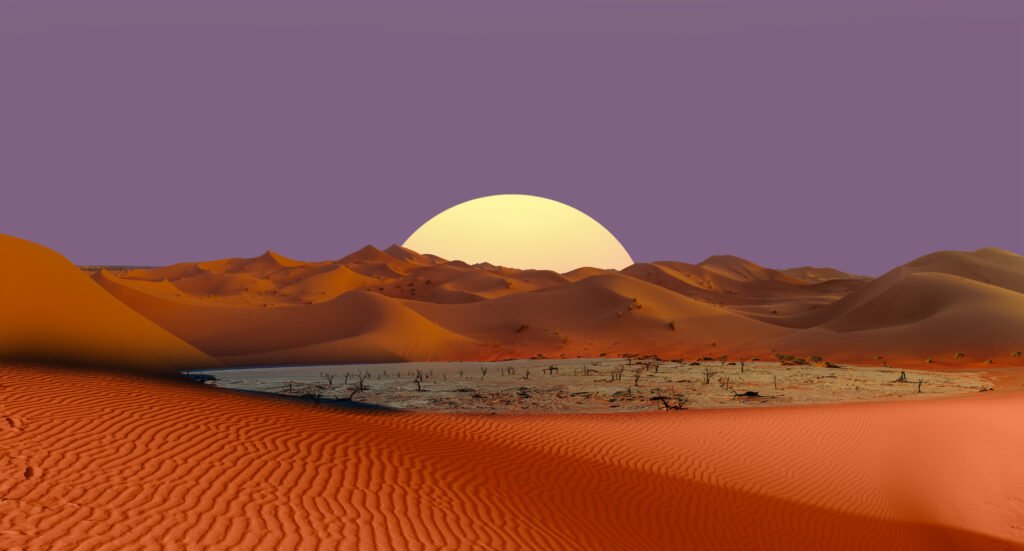
World's Largest Sand Dunes
The Namib Desert is home to some of the world's tallest sand dunes and most striking desert landscapes. Sossusvlei features towering red dunes that reach over 300 meters high, an ancient clay pan dotted with dead trees, and some of the clearest night skies on Earth.
Iconic Red Sand Dunes
The red sand dunes of Sossusvlei stand as some of the highest dunes on Earth. These massive formations rise up to 325 meters above the desert floor and stretch across the landscape in waves of burnt orange and deep red. The dunes get their distinctive color from iron oxide in the sand, which has oxidized over millions of years.
Located within Namib-Naukluft National Park, these desert sands are estimated to be around 5 million years old. The dunes create a natural barrier that stops the Tsauchab River from flowing further into the desert. Visitors can explore the area year-round, though temperatures can reach extreme highs during summer months.
Wildlife adapts to survive in these harsh conditions. Oryx, jackals, and geckos all call this desert home. The best light for viewing the dunes occurs during early morning and late afternoon when shadows create dramatic contrasts across the sand ridges.
Deadvlei: Ancient Clay Pan
Deadvlei sits at the base of some of Sossusvlei's tallest dunes. This white clay pan contains the skeletal remains of camel thorn trees that died roughly 600 to 700 years ago. The trees turned black over time but never decomposed due to the extremely dry climate.
The contrast between the white pan floor, black tree skeletons, blue sky, and surrounding red dunes makes Deadvlei a unique location. Visitors reach the pan by parking at the 2x4 car park and walking about one kilometer across the sand. The walk takes 15 to 20 minutes depending on fitness level.
Photography enthusiasts visit Deadvlei throughout the day as the changing light creates different moods. Morning light brings out the warm tones in the dunes while midday sun creates stark contrasts perfect for dramatic shots.
Climbing Big Daddy and Dune 45
Dune 45 rises 85 meters above the desert floor and sits 45 kilometers from Sesriem Gate. This dune is the most climbed formation in the area because of its accessible location right next to the main road. The climb takes 40 to 60 minutes and offers views across the desert at sunrise.
Big Daddy stands as the tallest dune in the Sossusvlei area at 325 meters high. The climb is more challenging and takes about one to two hours depending on fitness and sand conditions. Hikers should start early in the morning before the sand becomes too hot to walk on.
Both dunes require moderate fitness levels. The loose sand makes climbing difficult as feet sink with each step. Visitors should bring plenty of water, sun protection, and wear closed shoes that can handle hot sand.
Photography and Stargazing
The Namib Desert ranks among the best locations for night sky observation. Minimal light pollution and clear, dry air create perfect conditions for stargazing. The Milky Way appears as a bright band across the sky visible to the naked eye.
Photography opportunities exist throughout the day. The red dunes photograph best during golden hour when long shadows emphasize the curves and ridges. Many photographers stay at Sossusvlei Desert Lodge or Wolwedans, which offer convenient access to the dunes for dawn and dusk shoots.
Namib-Naukluft Park protects this desert landscape and manages visitor access. The park gates open before sunrise to allow photographers to catch first light on the dunes. Tripods and wide-angle lenses work best for capturing the scale of the landscape and the star-filled night sky.